EN
EN



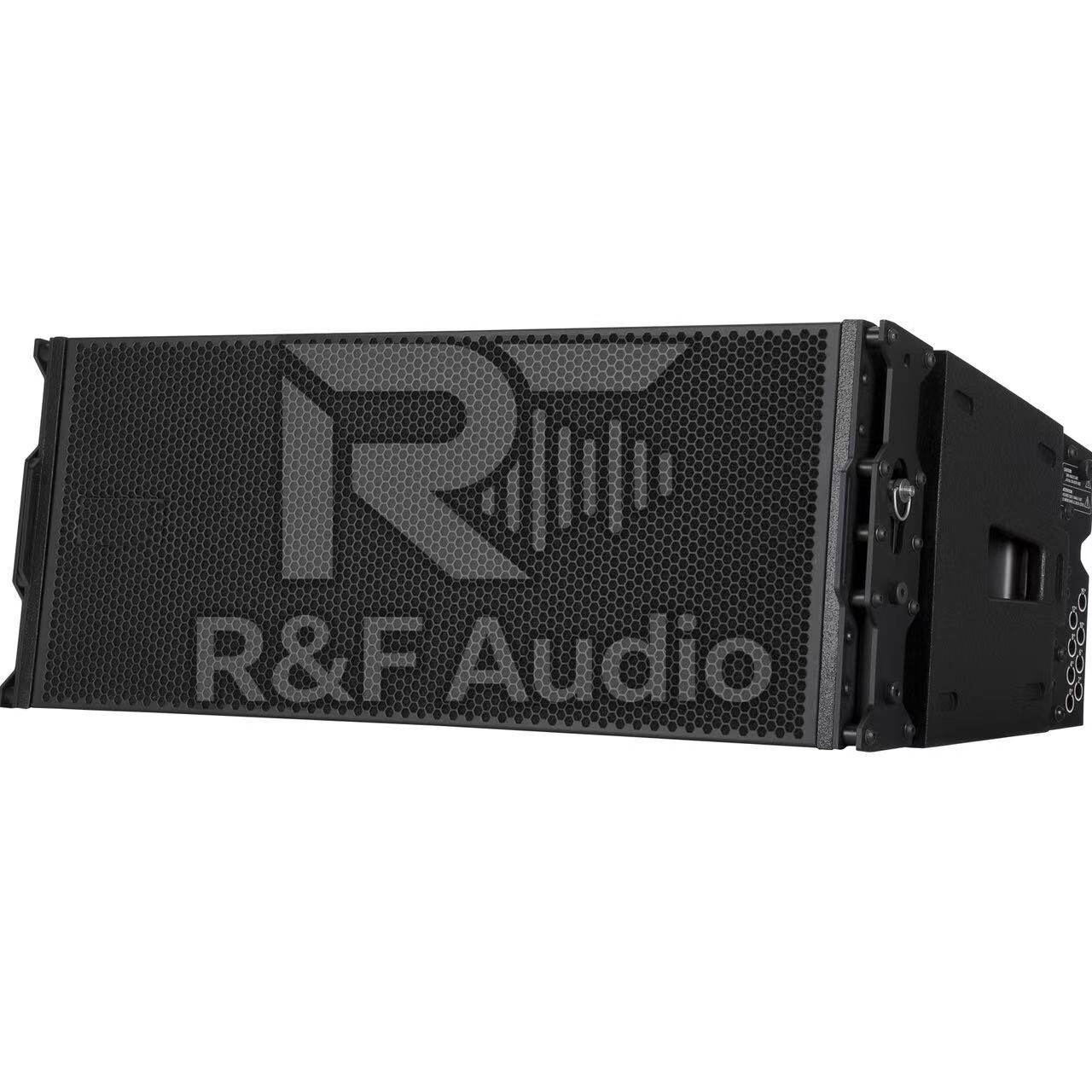
When it comes to live sound reinforcement, not every subwoofer is built to handle the demands of touring and stage performance. A professional stage subwoofer must endure the rigors of repeated transport, variable acoustic environments, high continuous output demands, and extreme reliability expectations that studio or home audio equipment simply cannot meet. Understanding what separates a touring-grade low-frequency unit from an ordinary subwoofer is essential for audio engineers, production managers, and rental companies investing in long-term performance infrastructure.
A professional stage subwoofer used in touring contexts is evaluated against a very different set of criteria than consumer or semi-pro gear. Output consistency across venues, mechanical durability during transit, thermal management under continuous use, and seamless system integration all define whether a unit belongs on a professional stage or not. This article breaks down the core factors that determine touring and stage suitability, so that procurement and technical decisions can be made with real confidence.
Acoustic Output and Low-Frequency Performance
SPL Capability and Headroom
The most fundamental requirement of any professional stage subwoofer is the ability to deliver sustained, high-output low-frequency sound without distortion or compression artifacts. Touring stages — from festival main stages to mid-size club venues — demand subwoofers capable of reaching peak SPL levels well above 130 dB, often sustained over extended set durations. Inadequate headroom leads to audible compression at high drive levels, which undermines the impact and clarity that audiences and artists expect.
Driver excursion capability plays a central role here. Professional stage subwoofer drivers are engineered with long-throw voice coils and high-compliance surrounds that allow substantial cone movement without mechanical failure. This translates directly into tight, controlled bass at extreme output levels, rather than the muddy, smeared low end that characterizes underpowered or consumer-grade alternatives.
Equally important is how a professional stage subwoofer maintains its tonal character at varying volumes. Touring situations rarely allow extended soundchecks, and the subwoofer must perform predictably whether driven at 60% or at full capacity. Consistent frequency response across the entire operating range is not a luxury — it is a technical baseline that every serious touring unit must satisfy.
Frequency Extension and Crossover Design
A professional stage subwoofer must extend cleanly into the sub-bass register — typically down to 30–40 Hz — to reproduce the full weight of kick drums, bass guitars, electronic music, and orchestral content at live scale. Shallow low-end extension creates a perception of thinness in the overall system, which no amount of mid-bass boosting can fully compensate for.
The crossover design is equally critical. A professional stage subwoofer must integrate seamlessly with the accompanying main PA cabinets, with the crossover point typically set between 80 Hz and 120 Hz depending on system configuration. Built-in DSP-managed crossovers allow touring engineers to fine-tune this transition in the field without relying on external processing units, saving time during setup and reducing potential failure points in the signal chain.
Modern professional stage subwoofer designs increasingly incorporate infrasonic filtering and subsonic protection to prevent mechanical overexcursion at extreme low frequencies. This engineering detail is often overlooked, but it significantly extends driver life and prevents unexpected failures mid-performance — a scenario that no touring production can afford.
Build Quality and Road-Worthiness
Cabinet Construction and Material Integrity
A professional stage subwoofer spends as much time in transit as it does on stage. Road cases, loading docks, rigging points, and stacking configurations all expose the cabinet to mechanical stress that domestic or semi-professional enclosures simply were not designed to withstand. This is why touring-grade subwoofers are built with multi-layered Baltic birch or comparable high-density plywood, reinforced with internal cross-bracing and impact-resistant corner hardware.
The exterior finish of a professional stage subwoofer must also resist abrasion, moisture, and UV exposure. Polyurea or tough textured coatings provide far superior durability compared to standard vinyl wraps or paint finishes. When a subwoofer is touring across multiple climates and handling styles, the physical integrity of the cabinet directly correlates with long-term reliability and resale value.
Heavy-duty recessed handles, speaker protection grilles with robust mounting hardware, and locking connector panels all reflect the engineering philosophy behind a genuine professional stage subwoofer. These details might seem minor in isolation, but collectively they define whether a cabinet survives 200 shows or deteriorates after 20.
Rigging, Stacking, and Deployment Flexibility
Touring applications demand flexibility in deployment. A professional stage subwoofer must support ground stacking, flown configurations where structurally permitted, and cardioid array setups that require precise angular placement. Rigging points integrated into the cabinet structure — rated for safe working loads that exceed the cabinet's own weight with appropriate safety margins — are a non-negotiable feature for any flown or complex array use case.
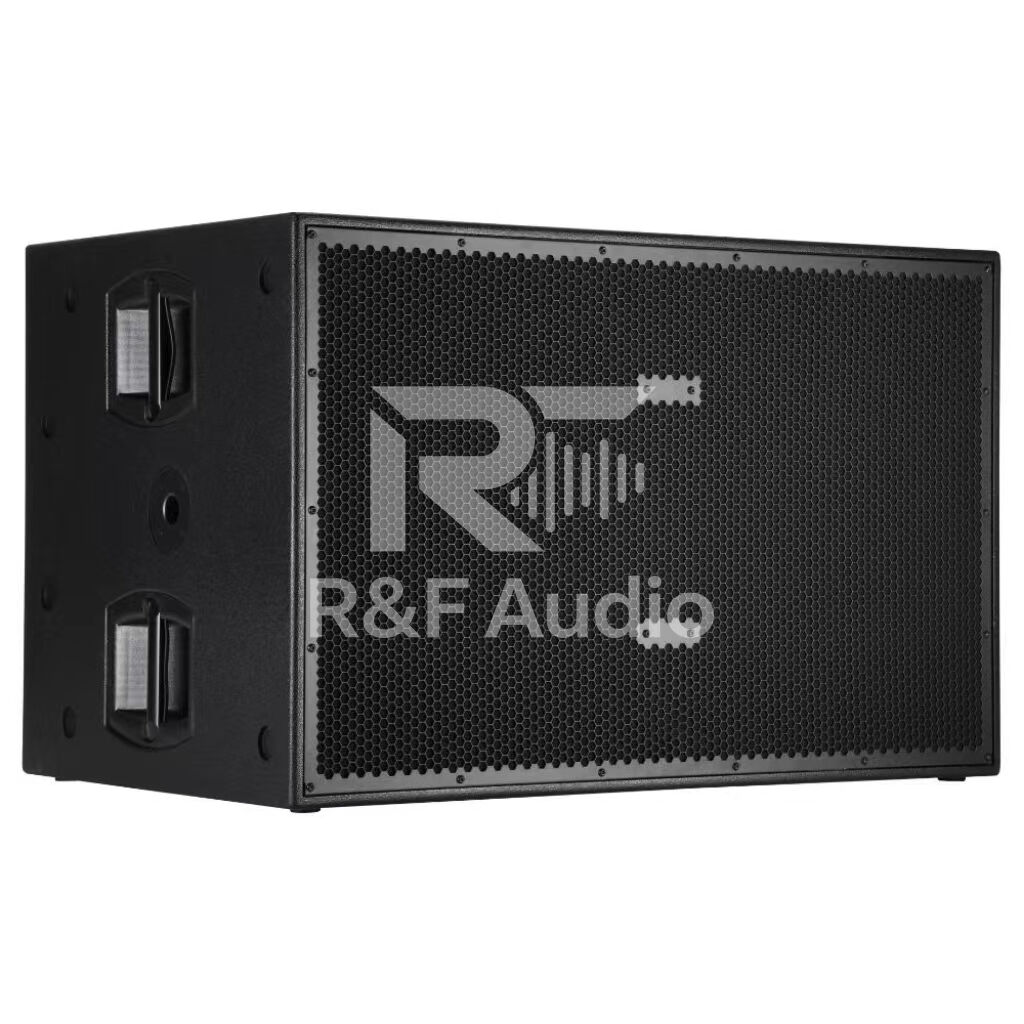
The footprint and stacking geometry of a professional stage subwoofer also matter significantly in compact venue and festival scenarios. Cabinets engineered with flat top surfaces and front-facing port or woofer designs allow for flexible stacking arrangements, including the placement of satellite PA tops directly on the subwoofer without the need for additional poles or hardware in certain configurations.
Cardioid subwoofer arrays have become a standard technique in touring sound, and the enclosure design of a professional stage subwoofer must accommodate reverse-mounting of the driver array without compromising structural integrity. Some modern touring subwoofers are specifically designed with internal chamber geometry optimized for cardioid deployment, making on-site configuration faster and acoustically more predictable.
Amplification and Power Management
Integrated Amplifier Performance
Active professional stage subwoofer designs dominate the touring market for good reason. Integrated Class D amplifier modules with high power-to-weight ratios eliminate the need for separate amplifier racks, reduce total system weight, and simplify touring logistics considerably. When the amplifier is matched to the driver at the factory level, the entire system operates with optimized damping factor, protection parameters, and DSP tuning that an external amplifier setup can rarely replicate without significant time investment.
Thermal management is a critical design consideration for any active professional stage subwoofer Prolonged high-output performance in warm environments — outdoor festival stages in summer, poorly ventilated club basements — requires amplifier modules with efficient heat dissipation, thermal throttling intelligence, and low-noise cooling fan designs that do not create unwanted acoustic artifacts near the stage.
Power factor correction and wide voltage range acceptance also matter in touring contexts. A professional stage subwoofer that operates reliably on inconsistent mains power from venues across different regions adds operational resilience to a touring production. Amplifier modules rated for 100V–240V operation with active power factor correction are significantly more reliable in international touring scenarios than units with narrow voltage tolerance.
DSP Integration and Remote Control
Digital signal processing built directly into a professional stage subwoofer enables on-site system tuning without external hardware. Parametric EQ, delay alignment, limiter settings, and crossover configuration can all be managed from the subwoofer itself, from a dedicated software interface, or through networked control systems — increasingly common in contemporary touring sound infrastructure.
Remote monitoring and control capability is becoming a standard expectation for any touring-grade professional stage subwoofer. Network connectivity allows front-of-house engineers to adjust subwoofer parameters in real time, monitor amplifier temperatures, diagnose signal path issues, and implement system-wide changes without physical access to the cabinets — which may be distributed across a large stage or rigged in positions that are difficult to reach mid-show.
Preset memory is another practical DSP feature that touring engineers value highly. A professional stage subwoofer that stores multiple venue or configuration presets reduces soundcheck time dramatically, allowing the same unit to transition from a festival main stage configuration to an indoor arena deployment with minimal manual adjustment. This operational efficiency compounds over the course of a long tour.
Reliability, Serviceability, and Total Cost of Ownership
Component-Level Reliability for Sustained Touring
The true test of a professional stage subwoofer's suitability for touring is not peak performance under ideal conditions — it is sustained, consistent performance across hundreds of deployments over multiple years. This requires component selection that prioritizes mean time between failures, with driver components, amplifier modules, and connector interfaces all specified to commercial and industrial reliability standards rather than consumer-grade benchmarks.
Driver suspension materials used in a touring professional stage subwoofer must resist creep, fatigue, and degradation under repeated high-excursion use. Premium foam or rubber surrounds with progressive compliance characteristics maintain consistent performance across a wider temperature range and over a longer service life than budget equivalents. Voice coil formers wound with high-temperature wire and bonded with thermally stable adhesives resist the heat generated during sustained high-power operation.
Connector quality should never be underestimated in the context of a professional stage subwoofer. Neutrik-style locking connectors, robust XLR input panels, and clearly labeled rear I/O sections reduce the risk of misconnection during rapid venue changeovers, while also providing the mechanical security necessary to prevent signal interruption when cables are under tension or experiencing accidental contact during a live performance.
Serviceability and Field Maintenance
Even the most durable professional stage subwoofer will require maintenance over its service life. Touring companies and rental houses prioritize units where driver replacement, amplifier module swaps, and connector repairs can be performed quickly with standard tools. Modular amplifier designs that allow hot-swappable amplifier plates significantly reduce downtime compared to units where the amplifier is deeply integrated into the cabinet structure.
Access to replacement components is a long-term procurement consideration that is often overlooked at the point of initial purchase. A professional stage subwoofer from a manufacturer with consistent component availability and a global service network provides far lower total cost of ownership than a unit that requires lengthy international shipping for basic spare parts.
Documentation quality also reflects a manufacturer's commitment to the professional touring market. Detailed wiring diagrams, driver Thiele-Small parameters, amplifier module specifications, and network protocol documentation allow technical engineers to service, diagnose, and modify their professional stage subwoofer deployments without manufacturer dependency — an important operational independence for touring companies operating across multiple time zones.
System Integration and Compatibility
Matching a Subwoofer to the Full PA System
A professional stage subwoofer does not operate in isolation — it is always part of a larger system that includes full-range tops, amplifiers, processing units, and cabling infrastructure. Compatibility with the existing or planned PA system is therefore a key selection criterion. Sensitivity matching between the subwoofer and the tops ensures that the entire system operates at a consistent drive level, preventing the subwoofer from clipping while the tops are still operating with significant headroom, or vice versa.
Impedance and cabling considerations are also relevant when configuring a professional stage subwoofer within a larger rig. Units that support both parallel and series wiring configurations, with clearly marked connection diagrams, simplify the installation of multi-subwoofer arrays and reduce the risk of amplifier damage from incorrect impedance loads. Many touring engineers appreciate subwoofers with loop-through output connections that facilitate daisy-chaining in distributed delay configurations.
Finally, the physical dimensions and weight of a professional stage subwoofer directly affect system transportability and labor costs. A dual 18-inch active subwoofer that delivers exceptional output while remaining within a manageable weight range represents a significant logistical advantage on a busy touring schedule, where loading and unloading time compounds across dozens of shows into meaningful cost and schedule implications.
Scalability Across Venue Sizes
A truly versatile professional stage subwoofer should scale effectively from intimate club performances to mid-size arenas without requiring fundamental changes to the system architecture. This scalability is achieved through DSP control that allows output limiting and frequency contouring to suit smaller acoustic environments, combined with sufficient raw headroom to fill larger spaces when configured at full output.
Arrays of professional stage subwoofer units can be built incrementally, allowing touring productions to deploy a minimum system for smaller dates and expand the subwoofer count for larger shows without introducing tonal inconsistency or integration challenges. This scalability makes a consistent professional stage subwoofer platform a sound long-term investment for companies managing tours across a wide range of venue categories.
Networked DSP control becomes especially valuable in scalable array configurations, where multiple professional stage subwoofer units must operate as a coherent system with matched delay, level, and polarity settings. Productions that invest in subwoofers with robust network control capability find that expanding and reconfiguring their system on the road requires significantly less time and technical effort than managing large arrays through traditional analogue methods.
FAQ
What driver configuration is most common in a professional stage subwoofer for touring?
Dual 18-inch driver configurations are among the most widely used in touring-grade professional stage subwoofer designs because they offer an excellent balance of low-frequency extension, high SPL output, and manageable cabinet dimensions. Single 21-inch configurations are also used where maximum sub-bass depth is prioritized, while dual 12-inch or dual 15-inch designs may be selected for compact touring rigs where total weight and package size are critical constraints.
How important is DSP in a professional stage subwoofer for live applications?
DSP is extremely important in a modern professional stage subwoofer. It enables precise crossover management, driver protection limiting, system alignment delay, and EQ tuning — all within the cabinet itself, without dependency on external processors. For touring applications where setup time is limited and system configurations change regularly, onboard DSP with preset memory is a significant operational advantage that directly impacts sound quality and system reliability.
Can a professional stage subwoofer designed for touring also work in permanent installation contexts?
Yes, many professional stage subwoofer models designed for touring perform very well in permanent installation contexts. Their high reliability standards, robust build quality, and extensive DSP capabilities are equally valuable in installed sound environments. The key consideration is physical form factor — touring designs may have road-ready features like heavy-duty hardware and protective finishes that are unnecessary in a fixed install but do not detract from acoustic or technical performance.
What should be checked when evaluating a professional stage subwoofer for a rental inventory?
When evaluating a professional stage subwoofer for rental inventory, the key considerations include driver and amplifier reliability ratings, availability of service documentation and spare parts, compatibility with existing PA tops and processing, rigging and stacking capabilities, total weight and transport package size, and the depth of onboard DSP control. Total cost of ownership — factoring in expected maintenance cycles and component availability — should be assessed alongside initial purchase price to arrive at a genuinely informed procurement decision.
Table of Contents
- Acoustic Output and Low-Frequency Performance
- Build Quality and Road-Worthiness
- Amplification and Power Management
- Reliability, Serviceability, and Total Cost of Ownership
- System Integration and Compatibility
-
FAQ
- What driver configuration is most common in a professional stage subwoofer for touring?
- How important is DSP in a professional stage subwoofer for live applications?
- Can a professional stage subwoofer designed for touring also work in permanent installation contexts?
- What should be checked when evaluating a professional stage subwoofer for a rental inventory?