EN
EN



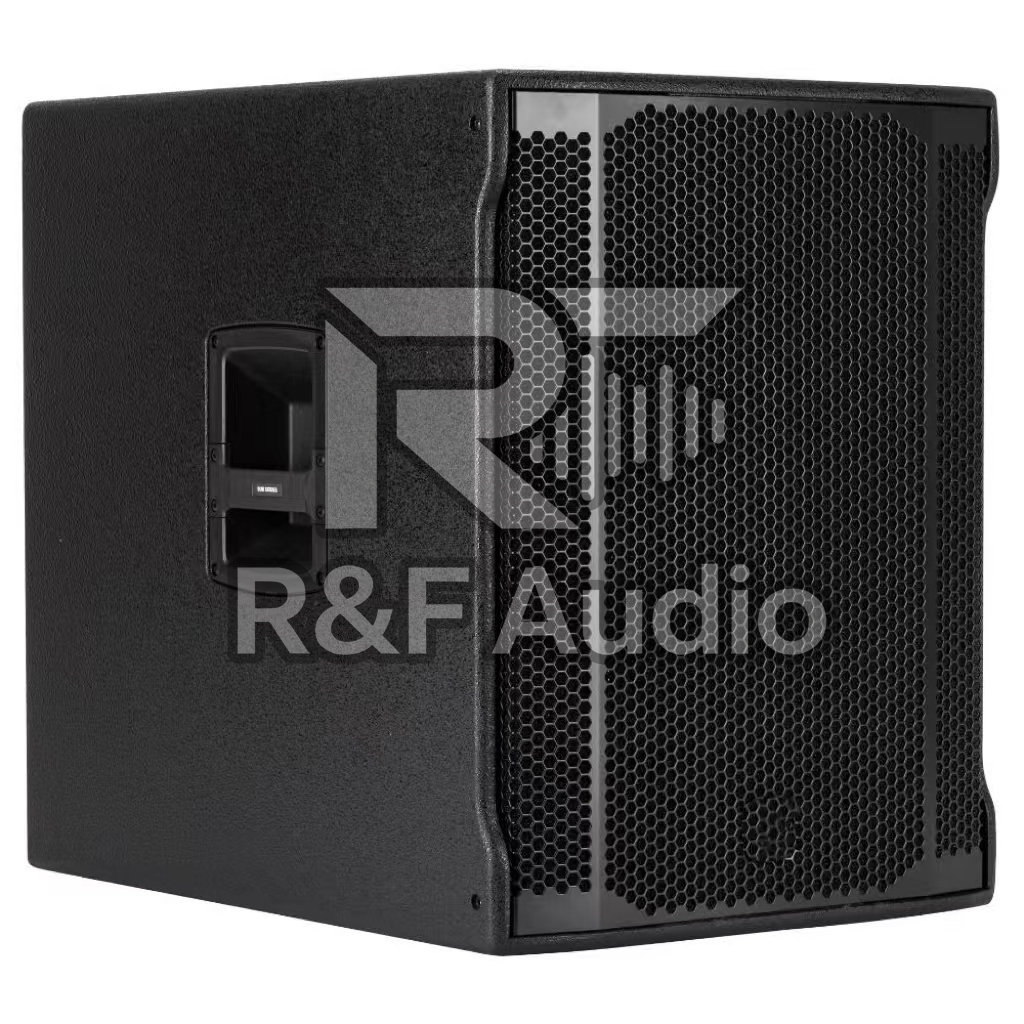
When it comes to professional audio in large venues, the difference between a mediocre experience and a truly immersive one often comes down to bass reproduction. A high-power subwoofer is not simply an add-on for extra volume — it is a fundamental component that shapes how an audience perceives and physically feels sound. From concert arenas and open-air festivals to convention centers and houses of worship, the role of low-frequency reinforcement is both technical and experiential, and ignoring it means leaving the most visceral dimension of sound entirely out of the picture.
The physics of sound propagation in large spaces creates specific challenges that only a purpose-built, high-power subwoofer can address. Bass frequencies are long-wave, energy-intensive signals that require substantial driver displacement, amplifier headroom, and enclosure design to reproduce faithfully at scale. Understanding why these technical demands exist — and what happens when they are not met — is essential knowledge for any sound engineer, venue manager, or AV systems integrator working in professional audio environments.
The Physics of Low Frequencies in Large Spaces
Why Bass Demands More Power Than Any Other Frequency
Low-frequency sound waves carry significantly more energy per cycle than mid or high-frequency signals. At 40 Hz, a single wavelength stretches approximately 8.5 meters through air. Reproducing this wavelength at sufficient sound pressure levels across a large venue requires a driver that can move a large volume of air, and that requires substantial continuous and peak power from the amplifier section. A high-power subwoofer is engineered specifically to handle these demands without distortion or thermal failure.
In smaller rooms, reflective surfaces and room modes can actually reinforce bass frequencies, sometimes to a fault. In large venues, especially outdoor environments, these natural reinforcements disappear. The sound system must compensate entirely through raw output capability. Without a high-power subwoofer designed for professional-grade SPL delivery, the low-end will seem thin, weak, and ultimately unconvincing — regardless of how capable the mid and high-frequency components are.
This is why power ratings matter significantly in subwoofer selection for large-scale applications. A unit rated at several kilowatts of continuous power, supported by properly designed porting, cone excursion management, and thermal dissipation, will maintain consistent bass reproduction under sustained, high-demand conditions. Undersized units will compress dynamically, distort, or simply fail when pushed beyond their design limits in demanding live environments.
Acoustic Coverage and SPL Requirements at Distance
Sound pressure level drops approximately 6 dB for every doubling of distance from a point source. In a large venue where audience members may be 30, 50, or even 100 meters from the main system, maintaining adequate bass SPL at the far reaches of the coverage area requires enormous headroom at the source. A high-power subwoofer provides that headroom, ensuring that even the furthest audience member experiences the full-spectrum impact the content demands.
Professional sound designers routinely deploy multiple high-power subwoofer units in arrays — cardioid configurations, end-fire arrays, or distributed sub placements — specifically to extend and even bass coverage across vast floor areas. Each of these deployment strategies depends critically on each individual unit having sufficient power and output efficiency to contribute meaningfully to the overall system gain structure.
When the subwoofer system is underpowered for the venue, engineers are forced to push amplifiers harder, which increases distortion, reduces headroom for transient peaks, and accelerates component wear. Starting with a properly specified high-power subwoofer eliminates this chain of compromises before it begins.
How a High-Power Subwoofer Elevates the Audience Experience
The Physical Impact of Controlled Bass Energy
At its most fundamental level, powerful bass is felt as much as it is heard. The human body responds to low-frequency energy through tactile sensation — in the chest, the diaphragm, the extremities. This physical dimension of audio is not incidental to the live event experience; for many genres and applications, it is central to emotional engagement. A high-power subwoofer delivers this impact cleanly and controllably, without the muddy distortion that characterizes underpowered systems being driven beyond their capability.
In live music contexts, kick drums, bass guitars, synthesizer sub-bass, and low-end orchestral instruments all rely on this frequency range for their presence and weight. When these elements are reproduced faithfully by a capable high-power subwoofer, audiences respond instinctively — they feel the music engaging them at a level that no amount of mid or high-frequency enhancement can replicate. Event producers and venue operators understand that this visceral connection drives audience satisfaction and return attendance.
Beyond music, applications such as cinematic screenings, esports events, corporate presentations with video content, and religious services with contemporary worship music all benefit from extended, accurate bass reproduction. In each context, a high-power subwoofer is the component that transforms passive listening into active, embodied engagement with the audio content.
Maintaining Intelligibility Across the Full Frequency Spectrum
Counterintuitively, a well-designed high-power subwoofer system actually improves overall sound intelligibility rather than simply adding loudness. When bass frequencies are reproduced by a dedicated, high-performance subwoofer, the main full-range speakers are relieved of the burden of handling those demanding low frequencies. This results in lower distortion and improved dynamic performance across the mid and high frequencies, where speech intelligibility and musical clarity reside.
Active high-power subwoofer units with integrated DSP (digital signal processing) allow engineers to apply precise crossover points, phase alignment, EQ correction, and limiting parameters that protect both the subwoofer and the satellite speakers. This coordination between subsystems ensures that the total frequency response is coherent and balanced, rather than being dominated or muddied by uncontrolled bass energy from an overloaded or poorly integrated system.
The practical benefit is a sound system that sounds cleaner and more professional at every seat in the venue. A high-power subwoofer is therefore not competing with the rest of the system — it is the component that enables every other element of the system to perform at its best by taking responsibility for the most demanding part of the frequency spectrum.
Technical Specifications That Define Large-Venue Performance
Driver Size, Excursion, and Displacement
The transducer at the heart of a high-power subwoofer is typically an 18-inch or larger woofer capable of significant linear excursion — that is, the back-and-forth movement of the cone that generates low-frequency sound pressure. Larger drivers moving more air produce more SPL at lower frequencies, which is why professional-grade subwoofers for large venues are rarely built around smaller driver formats. The mechanical and thermal tolerances of professional 18-inch drivers, for instance, are engineered to sustain high power delivery over extended periods.
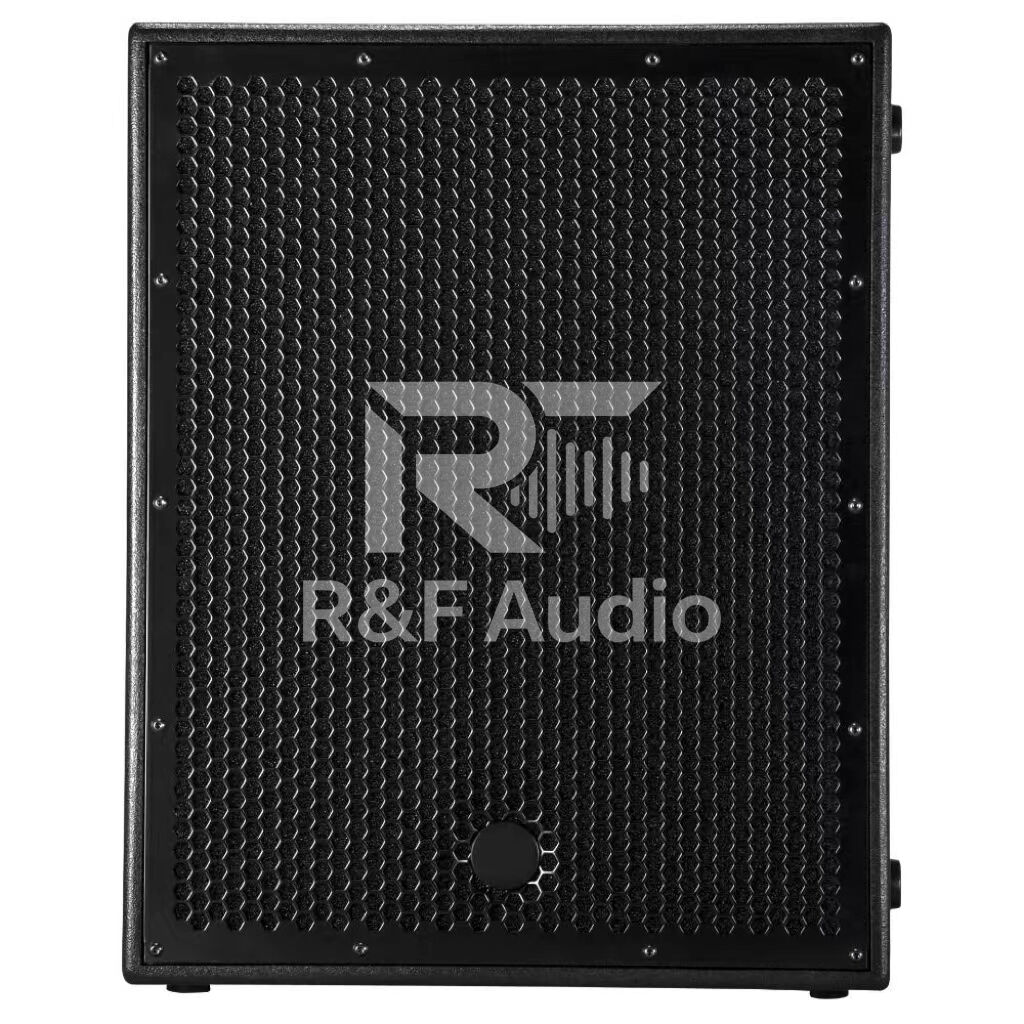
Enclosure design works in concert with the driver to optimize efficiency and low-frequency extension. Ported or bass-reflex enclosures, bandpass configurations, and horn-loaded designs each offer different trade-offs in terms of sensitivity, frequency extension, and directional control. A well-matched enclosure is what transforms a powerful driver into a truly effective high-power subwoofer system — the design philosophy of the enclosure is just as important as the raw driver specification.
For venue systems integrators, understanding the relationship between driver displacement, enclosure tuning frequency, and system sensitivity is key to selecting the right high-power subwoofer for a specific application. An outdoor festival requires different characteristics than a hard-walled indoor arena, and the specification process should always begin with a thorough acoustic analysis of the venue environment.
Amplifier Class and Power Headroom
Active high-power subwoofer designs integrate the amplifier within the enclosure, with modern designs typically using Class D amplification for its combination of high efficiency and compact form factor. Class D amplifiers can achieve efficiencies of 85–95%, meaning less energy is wasted as heat, allowing for sustained high-power output in demanding thermal environments without requiring impractical heat management systems.
Peak power handling is distinct from continuous (RMS) power handling, and both figures matter in professional audio. Live content — particularly music with percussive transients — can present peak demands several times higher than the average signal level. A high-power subwoofer with generous peak power headroom will handle these transients cleanly, while an underpowered system will clip the amplifier and distort the very moments — kick drum hits, bass drops — that require the most impact.
For large venue deployment, specifying a high-power subwoofer with substantial continuous power ratings — often in the range of 2,000 to 4,000 watts or more per unit — ensures that the system can maintain clean, distortion-free output at the sustained levels that large audiences and long-duration events demand.
Deployment Strategies for Large Venue Subwoofer Systems
Array Configurations and Coverage Design
A single high-power subwoofer, regardless of its individual output capability, is rarely sufficient for a large venue application. Professional system designs typically deploy multiple subwoofer units configured in strategic arrays. Ground-stacked arrays beneath the main line arrays provide a combined output that scales with the number of units, while flown sub configurations are used when the venue geometry or audience density demands elevated low-frequency reinforcement.
Cardioid subwoofer arrays use a combination of forward-facing and reverse-facing high-power subwoofer units with specific delay and polarity settings to create a directional bass response — pushing output toward the audience while suppressing rear radiation toward the stage. This technique dramatically improves the signal-to-noise ratio on stage, reducing low-frequency feedback risk and improving the monitor mix for performers, all while maintaining full audience coverage.
The end-fire array configuration places multiple subwoofer units in a line, front to back, with progressive delay settings that reinforce the forward wavefront while canceling backward radiation. Each of these advanced deployment strategies relies entirely on consistent, high-output performance from every individual high-power subwoofer in the array. Inconsistent units undermine the predictability of the combined system behavior.
Integration with Full-Range Systems and DSP Control
Modern professional audio systems use digital signal processing platforms to manage the interface between subwoofer arrays and full-range speaker systems. The crossover frequency, typically set between 80 and 120 Hz for most professional applications, determines which frequencies are handled by the high-power subwoofer and which are passed to the main cabinets. Getting this transition right requires careful attention to phase response across the crossover region to avoid frequency response anomalies at the crossover point.
Active high-power subwoofer designs with onboard DSP simplify this integration process significantly. Preset management, limiter alignment, and system-level EQ can be coordinated across all units in the array from a central control platform, giving the system engineer comprehensive, real-time control over the low-frequency behavior of the entire system during a live event.
The reliability of this integration is especially critical during live events where there is no second chance for a system failure. Choosing a professionally designed high-power subwoofer with robust protection circuitry, reliable DSP, and proven thermal management gives operators confidence that the system will perform consistently from the first soundcheck through the end of the final set.
FAQ
What makes a subwoofer suitable for large venue professional audio?
A subwoofer designed for large venue use must combine high continuous and peak power handling, a large-format driver with significant cone excursion capability, an enclosure optimized for efficiency and low-frequency extension, and robust DSP for system integration. A purpose-built high-power subwoofer for professional applications also incorporates thermal protection, signal limiting, and rugged construction suitable for the rigors of touring and long-term installation use.
How many subwoofer units are typically needed for a large venue?
The number of high-power subwoofer units required depends on the venue size, expected audience SPL targets, deployment configuration, and individual unit sensitivity and output capability. A general professional audio guideline is to design for adequate headroom above target SPL at maximum throw distance, which in large venues often requires a minimum of four to eight subwoofer cabinets per side in ground-stack configurations, with larger events using significantly more.
Is an active high-power subwoofer better than a passive unit for large venues?
For most large venue applications, an active high-power subwoofer — one with an integrated amplifier and DSP — offers significant practical advantages. Amplifier-driver matching is optimized at the factory, protection circuits are purpose-designed for the specific driver, and onboard DSP simplifies system integration. Passive subwoofers require external amplifiers and processing, which adds setup complexity and the risk of mismatched components, particularly problematic in large, complex system deployments.
Can a high-power subwoofer be used for outdoor events as well as indoor venues?
Yes. A professional high-power subwoofer designed with weather-resistant hardware, durable enclosure materials, and robust thermal management is well-suited to both outdoor festivals and indoor arenas. Outdoor deployments typically require even more output capability per unit, since the absence of room boundaries eliminates the bass reinforcement that indoor environments provide. Outdoor events are often the most demanding use case for any high-power subwoofer system precisely because there are no walls to help contain or reinforce low-frequency energy.